Is tradition a sufficient moral justification?
Can we practise Yoga while participating in violence against other living creatures? While lying? While stealing? While doing drugs or drinking alcohol? While engaging in abusive sexual relationships? While taking more than we need?
Of course we can. I practise Yoga and I’ve done all sorts of harmful things in my life that I deeply regret.
But I do think we’re personally responsible for helping build a more ethical, compassionate and conscious society than the one we grew up in. In many ways, I think humanity is moving in that direction. The purpose of looking to the past should not be to regress morally or excuse harm because it was once normal, but to learn, refine our understanding and reduce unnecessary suffering moving forward.
Because something was done by certain groups historically doesn’t necessarily mean it was ethical. We should therefore be cautious when calibrating our moral compass based on the behaviour of cave dwellers, medieval spiritualists or other ancient traditions.
When considering ethics and social justice, I think we should begin with those affected by our actions — especially the vulnerable, exploited and harmed — rather than beginning with our own desire to justify comfort, habit, identity or tradition. Who or what is being harmed by the way we live? Did they have a choice? Were they willing participants? Or was coercion, domination or violence required to get what we wanted?
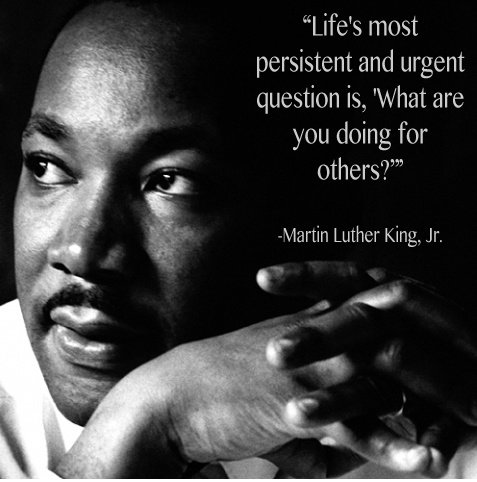
Martin Luther King Jr. said, “The arc of the moral universe is long, but it bends towards justice.”
Practising Yoga invites us to examine how our thoughts, words and actions impact the world around us and all other sentient beings.
If we follow the teachings sincerely, we may find the logical direction is to reduce our participation in exploitation and harm as much as possible, while cultivating the conditions for greater freedom, peace and wellbeing for others and ourselves.
But we are also living in an age of self-reification: the era of neoliberal capitalism, personal branding and influencer culture, where identity itself becomes a product to market and defend. Hyper-individualism encourages us to curate the self, ‘live our truth’, protect the ego and justify our desires, rather than question the wider consequences of how we live.
We can easily become attached to narratives that make us feel comfortable — including the idea that whatever has been done traditionally must therefore be natural, necessary or beyond ethical scrutiny. In that state, we may distort, minimise or justify our behaviour rather than honestly investigate it. But genuine practice asks more of us than self-affirmation. It asks us to become more conscious of interdependence and more sensitive to the consequences of our choices.
Rather than using the past to excuse ourselves, perhaps we can use it as a foundation for greater wisdom, compassion and responsibility in the present.
Lama Alan Wallace argues that while modern mindfulness is often presented as a secular, non-judgemental technique for individual stress reduction, traditional Buddhist mindfulness is an ethical and discerning practice designed to reveal interdependence and the moral consequences of our actions in the pursuit of liberation for all sentient beings.
S. N. Goenka taught that Ahimsa (non-harm) and Satya (truthfulness) require absolute self-honesty: we must recognise the harm we cause others because violence and dishonesty immediately disturb our own inner peace. My experience of this is that whenever I know I’m acting in a way that is shifty or misaligned, I feel it internally. At times, I’ve looked to others for justification or affirmation rather than fully facing what I already knew.
So I think Yoga practitioners and teachers are continually faced with a choice: to use philosophy and tradition to reinforce existing preferences and identities, or to allow practice to deepen our sensitivity, challenge our conditioning and expand our sense of responsibility towards others. For me, the latter is where genuine practice begins.